Summary

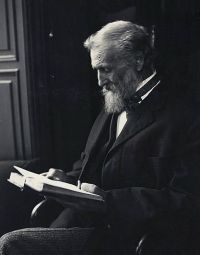
Portrait of John Muir John Muir The Yosemite — The Ancient Yosemite Glaciers … (1912)

No other mountain chain on this or any other of the continents that I have seen is so rich as the Sierra in bold, striking, well-preserved glacial monuments. Indeed, every feature is more or less tellingly glacial. Not a peak, ridge, dome, cañon, yosemite, lake-basin, stream or forest will you see that does not in some way explain the past existence and modes of action of flowing, grinding, sculpturing, soil-making, scenery-making ice.
Source: Wikisource

Portrait of John Muir John Muir The Yosemite — The Ancient Yosemite Glaciers … (1912)

The general view from the summit consists of a sublime assemblage of ice-born rocks and mountains, long wavering ridges, meadows, lakes, and forest-covered moraines, hundreds of square miles of them. The lofty summit-peaks rise grandly along the sky to the east, the gray pillared slopes of the Hoffman Range toward the west, and a billowy sea of shining rocks like the Monument, some of them almost as high and which from their peculiar sculpture seem to be rolling westward in the middle ground, something like breaking waves.
Source: Wikisource

Portrait of John Muir John Muir The Yosemite — The Ancient Yosemite Glaciers … (1912)

This broad and comparatively shallow glacier formed a sort of crawling, wrinkled ice-cloud, that gradually became more regular in shape and river-like as it grew older. Encircling peaks began to overshadow its highest fountains, rock islets rose here and there amid its ebbing currents, and its picturesque banks, adorned with domes and round-backed ridges, extended in massive grandeur down to the brink of the Yosemite walls.
Source: Wikisource

Get perspective with Kwize: daily news enlightened by great literature