Summary

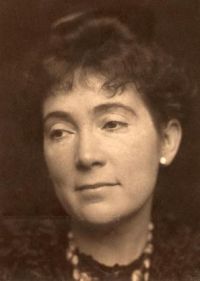
Portrait of John Oliver Hobbes John Oliver Hobbes The Annotated The Tales of John Oliver Hobbes… (1894)

There was never a Rachel [1] who had not lurking possibilities of the Jezebel [2] nor a Jezebel who had nothing of the Rachel—in weak moments. Cynthia had no sooner gained her point with Provence, when she began to have misgivings. She was not at all sure that she had been right. She should have waited a little longer : she should have remembered that if genius has an infinite capacity for taking pains it has also the tendency to dream—a process which the practical onlooker is apt to mistake for dawdling.
Source: Wikisource

Portrait of John Oliver Hobbes John Oliver Hobbes The Annotated The Tales of John Oliver Hobbes… (1894)

I got a fellow to explain it to me."
"I should have hated that husband," said Cynthia.
"How I should respect a man who had the strength of character to say, 'Cynthia, if there is anything in your style, I don't admire it. You are too tall, and I don't like the colour of your hair. However—' and so on. That would be treating me like a rational being."
"My experience of women is—" said Edward; and then he blushed. "I mean," he said, "all women like to be appreciated. Anyhow," he added, desperately, "if a woman is awfully beautiful, I don't see any harm in telling her so."
Source: Wikisource

Portrait of John Oliver Hobbes John Oliver Hobbes The Annotated The Tales of John Oliver Hobbes… (1894)

As it is now, I am sure you could argue yourself out of anything."
"Mustn't one argue if one is in love?"
"No; it's ever so much nicer to keep quiet and just go on loving."
"I call that very weak," said Cynthia. "I don't believe in falling in love, as you call it, to begin with; but if I felt that there was any—person—for whom I felt more—respect—than others, I should have to satisfy myself that the—person—could bear criticism."
"But if you love any one," said Edward, eagerly, "you don't want to criticise them.
Source: Wikisource

Get perspective with Kwize: daily news enlightened by great literature