Summary

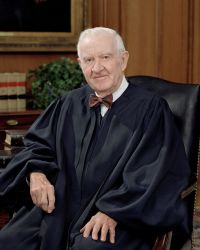
Portrait of John Paul Stevens John Paul Stevens Scheidler v. National Organization for Women… (2003)

The right to serve customers or to solicit new business is thus a protected property right. The use of violence or threats of violence to persuade the owner of a business to surrender control of such an intangible right is an appropriation of control embraced by the term "obtaining." That is the commonsense reading of the statute that other federal judges have consistently and wisely embraced in numerous cases that the Court does not discuss or even cite.
Source: Wikisource

Portrait of John Paul Stevens John Paul Stevens Scheidler v. National Organization for Women… (2003)

While they concede that rubbish removal accounts which are purchased and sold are probably property, they argue that the right to solicit business is amorphous and cannot be squared with the Congressional expression in the Act of 'obtaining property.' The Hobbs Act 'speaks in broad language, manifesting a purpose to use all the constitutional power Congress has to punish interference with interstate commerce by extortion, robbery or physical violence.' Stirone v.
Source: Wikisource

Portrait of John Paul Stevens John Paul Stevens Scheidler v. National Organization for Women… (2003)

Thus, even when an extortionist has not taken possession of the property that the victim has relinquished, she has nonetheless 'obtain [ed] ' that property if she has used violence to force her victim to abandon it. The fact that the target of a threat or attack may have refused to relinquish his property does not lessen the extortionist's liability under the Hobbs Act, for the Act, by its terms, also reaches attempts.
Source: Wikisource

Get perspective with Kwize: daily news enlightened by great literature