John Payne Collier

John Payne Collier

Summary

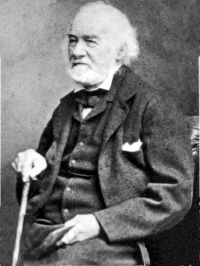
Portrait of John Payne Collier John Payne Collier Punch and Judy (1870)

Punch has experienced, and the industry employed in collecting particulars relating to other performers of far less reputation, is remarkable. If an actor, on any of our public stages, attain only a moderate degree of eminence, hundreds are on the alert to glean the minutest particulars of his "birth, parentage, and education, life, character, and behaviour;"
Source: Wikisource

Portrait of John Payne Collier John Payne Collier Punch and Judy (1870)

He is, perhaps, himself in part to blame for the neglect we have noticed. Several of the principal supporters of our theatres, in our own day, have given their memoirs to the world, either by writing them with their own hands, or by furnishing the materials to others
Source: Wikisource

Portrait of John Payne Collier John Payne Collier Punch and Judy (1870)

It is also found in Massinger:
"Though desire of fame be the last weakness
Wise men put off.— (A Very Woman, Act 5, Sc. 4.)
And Owen Feltham follows Tacitus very closely: "Desire of glory is the last garment that even wise men lay aside."— (Resolves, p. 15.) We may wind up the whole with Milton, who, like others, has deemed the thought common property, when he tells us in Lycidas, that fame is
"That last infirmity of noble mind:"
upon which, in fact, Marvel's line, above quoted (and which is to be found in his "Satire on Flecno, an English priest, at Rome") is only a parody.
Source: Wikisource

Get perspective with Kwize: daily news enlightened by great literature