Summary

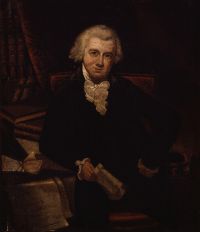
Portrait of John Reeves John Reeves History of the government of the island of Newfoundland

I have made it my particular care to inform myself about the government, that being the material and only thing wanting: for without that there is nothing; and with that, I mean a good government, there would be every thing—it would give a new life and spirit to every thing; for then every man would know his own, and no more; every one would know his master, and obey; and every one would know his servant, and no more; every servant would do his master’s work, and every master would pay his servants’ wages without fraud
Source: Gutenberg

Portrait of John Reeves John Reeves History of the government of the island of Newfoundland

There was no doubt in the minds of any, above the very lowest class, but the whole of this judicature was an usurpation: it was, therefore, more frequently employed as an engine of authority, to obtain that by a course of law, which could not, perhaps, be attained by open violence, than as the means of protecting the weak against the powerful. A merchant rather chose to have the assistance of the court of session or admiralty, to attach and seize the effects of his debtor, than incur the odium of taking them with force.
Source: Gutenberg

Portrait of John Reeves John Reeves History of the government of the island of Newfoundland

This has been done by a great many, but especially by one Ford, who had a power left him by a commander of one of his majesty’s ships to be governor of Petty Harbour. I have seen, and heard so very much of this, that I faithfully believe, and I have done myself the honour in two letters to my lords of trade, to acquaint them, as I here do, that no man living in the country of Newfoundland is fit to govern. For the set of people that live here, are those that cannot live in Great Britain, or any where else, but in a place without government
Source: Gutenberg

Get perspective with Kwize: daily news enlightened by great literature