Summary

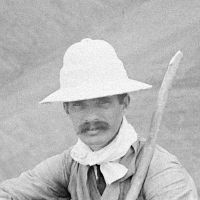
Portrait of John Smith Flett John Smith Flett 1911 Encyclopædia Britannica, Volume 21… (1911)

Although vitreous and pumiceous forms are known they are rare, and in the great majority of cases these rocks are finely crystalline with a dull or shimmering lustre in the ground-mass. Marked characteristics are the readiness with which they decompose, and the frequency of veins and cavities occupied by natrolite, analcite, scolecite and other zeolites. Small black grains of augite or hornblende and sometimes blue specks of hauyne may be seen in the rocks when they are fresh.
Source: Wikisource

Portrait of John Smith Flett John Smith Flett 1911 Encyclopædia Britannica, Volume 21… (1911)

The group includes rocks which are rich in alkalis with only a moderate percentage of silica; hence they contain no free quartz but much alkali felspar (sanidine and anorthoclase) and nepheline. Large plates of sanidine are often visible in the rocks; the nepheline is usually not obvious to the unaided eye. Most phonolites show fluxion structure, both in the orientation of their phenocrysts and in the smaller crystals which make up the ground mass, and this determines to a large extent the platy jointing.
Source: Wikisource

Get perspective with Kwize: daily news enlightened by great literature