Summary

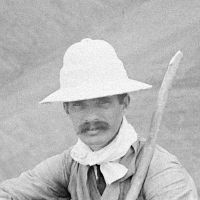
Portrait of John Smith Flett John Smith Flett 1911 Encyclopædia Britannica, Volume 5… (1911)

Very often the different rock types occur in close association as one set forms bands alternating with another set, or veins traversing it, and where one facies appears the others also usually are found. The term charnockite consequently is not the name of a rock, but of an assemblage of rock types, connected in their origin because arising by differentiation of the same parent magma.
Source: Wikisource

Portrait of John Smith Flett John Smith Flett 1911 Encyclopædia Britannica, Volume 5… (1911)

It is astonishing to find that in spite of their great age their minerals are often in excellent preservation. In India they form the Nilgiri Hills, the Shevaroys and part of the Western Ghats, extending southward to Cape Comorin and reappearing in Ceylon. Although they are certainly for the most part igneous gneisses (or orthogneisses) , rocks occur along with them, such as marbles, scapolite limestones, and corundum rocks, which were probably of sedimentary origin.
Source: Wikisource

Get perspective with Kwize: daily news enlightened by great literature