Summary

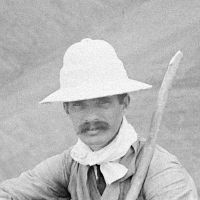
Portrait of John Smith Flett John Smith Flett 1911 Encyclopædia Britannica, Volume 8… (1911)

DIORITE (from the Gr. διορίζειν to distinguish, from διά through, ὅρος, a boundary) , in petrology, the name given by Haüy to a family of rocks of granitic texture, composed of plagioclase felspar and hornblende. As they are richer in the dark coloured ferromagnesian minerals they are usually grey or dark grey, and have a higher specific gravity than granite. They also rarely show visible quartz. But there are diorites of many kinds, as the name applies rather to a family of rocks than to a single species. Some contain biotite, others augite or hypersthene; many have a small amount of quartz.
Source: Wikisource

Portrait of John Smith Flett John Smith Flett 1911 Encyclopædia Britannica, Volume 8… (1911)

Orthoclase is rarely entirely absent, and when it is fairly common the rock becomes a tonalite; in this way a transition is furnished between diorites and granites. It is rare to find the pure types of “hornblende-diorite,” “augite-diorite,” &c., but in most cases the rocks contain two or more ferromagnesian silicates, and such combinations as “hornblende-biotite-diorite” are commonest in nature.
The felspar of the diorites ranges in composition from oligoclase to labradorite, and is often remarkably zonal, the external layers being more alkaline than the internal.
Source: Wikisource

Get perspective with Kwize: daily news enlightened by great literature