Summary

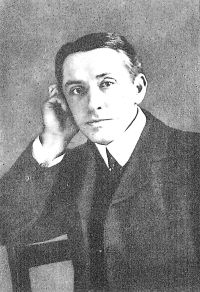
Portrait of Joseph Smith Fletcher Joseph Smith Fletcher The Middle of Things — XI. What Happened in Paris (1922)

Now, may it not be that the murder itself was actually committed in one of those houses, and that the body was carried out through a yard or garden to where it was found?"
"Ashton was a big and heavy man," observed Viner. "No one man could have carried him."
"Just so!" agreed Mr. Armitstead. "But don't you think there's a probability that more than one man was engaged in this affair! The man in the muffler, hurrying away, may have only been one of several."
Source: Wikisource

Portrait of Joseph Smith Fletcher Joseph Smith Fletcher The Middle of Things — XI. What Happened in Paris (1922)

Pawle looked at his visitor with still more interest and attention.
"Now, that really is of importance!" he exclaimed. "If Hyde saw such a man—as I believe he did—and you saw such a man, then that man must exist, and the facts that you saw him with Ashton, and that Hyde saw him in close proximity to the place where Ashton was murdered, are of the highest consequence. But—you can tell us more, Mr. Armitstead?"
Source: Wikisource

Portrait of Joseph Smith Fletcher Joseph Smith Fletcher The Middle of Things — XI. What Happened in Paris (1922)

You think this matter of the man in the muffler important?"
"Now that you've told us what you have, Mr. Armitstead, I think it's of the utmost importance and consequence—to Hyde," answered Mr. Pawle. "You must see his solicitor—he's Mr. Viner's solicitor too—and offer to give evidence when Hyde's brought up again; it will be of the greatest help. There's no doubt, to me, at any rate, that the man Hyde saw leaving the scene of the murder is the man you saw with Ashton in Paris.
Source: Wikisource

Get perspective with Kwize: daily news enlightened by great literature