Summary

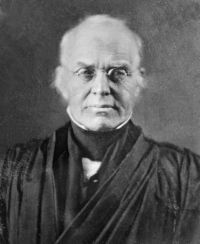
Portrait of Joseph Story Joseph Story Liter v. Green — Opinion of the Court

When once the tenant is summoned into court, either upon a writ of right patent or a writ of right close, the same exceptions and pleadings in abatement or in bar, and the same defence upon the merits, equally applies in a suit upon the one as the other. Nontenure, joint tenancy, sole tenancy, and several tenancy, are good pleas in abatement, wherever they apply to any parcel of the land demanded of any particular tenant or tenants.
Source: Wikisource

Portrait of Joseph Story Joseph Story Liter v. Green — Opinion of the Court

A verdict, certain to a common intent, is sufficient to sustain a judgment. At the trial, a bill of exceptions was taken. The first point in the exceptions is, the refusal of the court, upon the prayer of the counsel for the tenants, to direct the jury that the demandant was not entitled to recover in the suit, upon the proof by the tenants, that they claimed their several tenements under distinct and several titles. This refusal was perfectly correct; for the matter did not go to the merits, and could be taken advantage of only, as has been already stated, by a plea in abatement.
Source: Wikisource

Portrait of Joseph Story Joseph Story Liter v. Green — Opinion of the Court

Writs of right, since the reign of Queen Elizabeth, have gradually become obsolete in England, or of such rare occurrence, that the learning respecting them is not as well known as it deserves to be. Indeed, a modern treatise upon the general nature and structure of real actions, and the proper pleadings and evidence in each, is a desideratum in the science of jurisprudence.
Source: Wikisource

Get perspective with Kwize: daily news enlightened by great literature