Summary

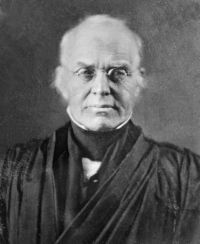
Portrait of Joseph Story Joseph Story Taylor v. Longworth — Opinion of the Court

The only substantial question in the cause is, whether, under all the circumstances, the plaintiff, Longworth, is entitled to a specific performance of the contract for the purchase: and upon the fullest consideration we are of opinion that he is, and that the decree is therefore right. We shall now proceed to state, in a brief manner, the grounds upon which we hold this opinion.
In the first place, there is no doubt that time may be of the essence of a contract for the sale of property.
Source: Wikisource

Portrait of Joseph Story Joseph Story Taylor v. Longworth — Opinion of the Court

If the contract had been strictly performed on the part of Taylor, by a conveyance, he would now have stood in the mere character of a mortgagee; for in that event Longworth stipulated to give him a mortgage for the security of the unpaid purchase money. Now, in the view of a Court of Equity, that may well be deemed the true posture of this case; upon the known principle, that equity will, for the purposes of justice, treat that to have been done, which ought to have been done.
Source: Wikisource

Portrait of Joseph Story Joseph Story Taylor v. Longworth — Opinion of the Court

In the mean time, Longworth had been left in the possession of the premises under the contract, had made improvements upon them, and had received the rents and profits with the acquiescence of Taylor. Under such circumstances, where there had been a part performance, and large expenditures on one side, under the contract, and acquiescence on the other side; it would be incompatible with established doctrines, to hold that one party could, at his own election, by a suit at law, put an end to the contract. It could be rescinded by Taylor only, by the decree of the Court of Equity
Source: Wikisource

Get perspective with Kwize: daily news enlightened by great literature