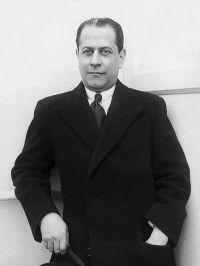
José Raúl Capablanca

José Raúl Capablanca

Summary

Portrait of José Raúl Capablanca José Raúl Capablanca Chess fundamentals — Part I, Chapter I.1… (1921)

It should be noticed how often the White King has moved next to the Rook, not only to defend it, but also to reduce the mobility of the opposing King. Now White mates in three moves thus: 9 R - R 4 ch, K - Kt 8; 10 R - any square on the Rook's file, forcing the Black King in front of the White, K - B 8; 11 R - R 1 mate. It has taken eleven moves to mate, and, under any conditions, I believe it should be done in under twenty. While it may be monotonous, it is worth while for the beginner to practice such things, as it will teach him the proper handling of his pieces.
Source: Wikisource

Portrait of José Raúl Capablanca José Raúl Capablanca Chess fundamentals — Part I, Chapter I.1… (1921)

Example 4.—We now come to Queen and King against King. As the Queen combines the power of the Rook and the Bishop, it is the easiest mate of all and should always be accomplished in under ten moves. Take the following position:
A good way to begin is to make the first move with the Queen, trying to limit the Black King's mobility as much as possible.
Source: Wikisource

Portrait of José Raúl Capablanca José Raúl Capablanca Chess fundamentals — Part I, Chapter I.1… (1921)

In this ending, as in the case of the Rook, the Black King must be forced to the edge of the board; only the Queen being so much more powerful than the Rook, the process is far easier and shorter. These are the three elementary endings and in all of these the principle is the same. In each case the co-operation of the King is needed. In order to force a mate without the aid of the King, at least two Rooks are required.
Source: Wikisource

Get perspective with Kwize: daily news enlightened by great literature