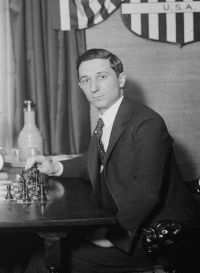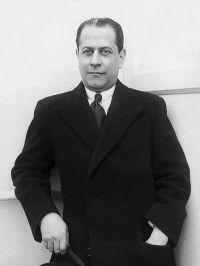
José Raúl Capablanca

Biographical details

Portrait of José Raúl Capablanca José Raúl Capablanca Chess Fundamentals

But yet the ending itself was not as simple as it at first appeared, and finally—perhaps through one weak move on my part—it became a very difficult matter to find a win. Had I been a weak end-game player the game would probably have ended in a draw, and all my previous efforts would have been in vain. Unfortunately, that is very often the case among the large majority of players; they are weak in the endings; a failing from which masters of the first rank are at times not free.
Source: Gutenberg

Portrait of José Raúl Capablanca José Raúl Capablanca Chess Fundamentals

It is evident that Marshall (White) is under great difficulties in the above position. Not only is he bound to lose a Pawn, but his position is rather poor. The best he could hope for was a draw unless something altogether unexpected happened, as it did. No reason can be given for Black's loss of the game except that he felt so certain of having the best of it with a Pawn more and what he considered a safe position, that he became exceedingly careless and did not consider the danger that actually existed.
Source: Gutenberg

Portrait of José Raúl Capablanca José Raúl Capablanca Chess Fundamentals

It is true that these are the most difficult positions to handle in a game. In such cases a player must conceive a plan on a large scale, which promises chances of success, and with it all, it must be a plan that can be carried out with the means at his disposal. From the look of the position it seems that Black's best chance would be to mass his forces for an attack against White's centre, to be followed by a direct attack against the King. He should, therefore, play Q R - K 1, threatening P - K B 4.
Source: Gutenberg

Get perspective with Kwize: daily news enlightened by great literature