Summary

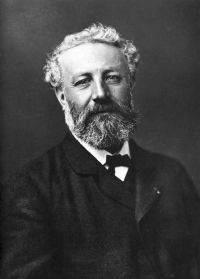
Portrait of Jules Verne Jules Verne Cæsar Cascabel — Part 1, Chapter XVI (1890)

And no one at Port Clarence could have imagined that so important a personage as Count Sergius Narkine was under the roof of the Fair Rambler.
Meanwhile, it had not been found possible, yet, to fix a day for the departure. They watched with the greatest impatience every change in the temperature,—a truly anomalous temperature,—and never in his life had Mr. Cascabel so ardently wished for such a frost “as the rocks themselves could not stand.”
Source: Wikisource

Portrait of Jules Verne Jules Verne Cæsar Cascabel — Part 1, Chapter XVI (1890)

Sergius to a fisherman, one day.
“No,” the man replied, “it is rather late. And that's another reason why you should not hurry before you are sure that you can get across. And then again, your wagon is heavier than a man on foot; it needs greater strength under it. Wait till a good fall of snow brings all the icebergs to a level, and then you can fire away, the same as on a highroad! Besides, you'll soon make up for lost time, and you won't have run the risk of remaining in distress, fair in the middle of the strait!”
Source: Wikisource

Portrait of Jules Verne Jules Verne Cæsar Cascabel — Part 1, Chapter XVI (1890)

Sergius did his utmost to calm his friend Cascabel, who proved the most impatient of the party. The chief point was to endanger, by no imprudent act, either the success of the journey or the safety of the travelers.
“Come,” he would say to him, “be calm and reasonable! your Fair Rambler is not a boat, and if it got caught between two ill-joined blocks of ice, it would not be long going to the bottom. The Cascabel family has no need of increasing its celebrity by seeking a watery grave in the strait of Behring!”
Source: Wikisource

Get perspective with Kwize: daily news enlightened by great literature