Summary

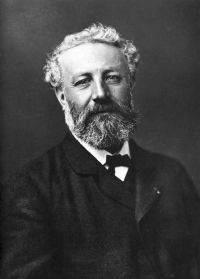
Portrait of Jules Verne Jules Verne From the Earth to the Moon — Chapter XIII

Cultivated plains soon appear, where are united all the productions of the northern and tropical floras, terminating in prairies abounding with pineapples and yams, tobacco, rice, cotton-plants, and sugar-canes, which extend beyond reach of sight, flinging their riches broadcast with careless prodigality.
Barbicane appeared highly pleased on observing the progressive elevation of the land; and in answer to a question of J. T. Maston, replied:
"My worthy friend, we cannot do better than sink our Columbiad in these high grounds."
Source: Wikisource

Portrait of Jules Verne Jules Verne From the Earth to the Moon — Chapter XIII

Two days after starting, the Tampico, having made four hundred and eighty miles, came in sight of the coast of Florida. On a nearer approach Barbicane found himself in view of a low, flat country of somewhat barren aspect. After coasting along a series of creeks abounding in lobsters and oysters, the Tampico entered the bay of Espiritu Santo, where she finally anchored in a small natural harbor, formed by the embouchure of the River Hillisborough, at seven P.M., on the 22d of October.
Source: Wikisource

Get perspective with Kwize: daily news enlightened by great literature