Summary

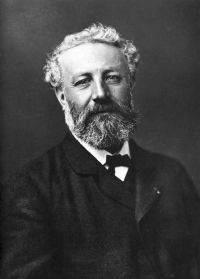
Portrait of Jules Verne Jules Verne From the Earth to the Moon — Chapter XV

As many pounds of metal as there were to cast, so many pounds of coal were there to burn. Thus there were 68,000 tons of coal which projected in the face of the sun a thick curtain of smoke. The heat soon became insupportable within the circle of furnaces, the rumbling of which resembled the rolling of thunder. The powerful ventilators added their continuous blasts and saturated with oxygen the glowing plates. The operation, to be successful, required to be conducted with great rapidity.
Source: Wikisource

Portrait of Jules Verne Jules Verne From the Earth to the Moon — Chapter XV

Cast iron, however, if subjected to only one single fusion, is rarely sufficiently homogeneous; and it requires a second fusion completely to refine it by dispossessing it of its last earthly deposits. So long before being forwarded to Tampa Town, the iron ore, molten in the great furnaces of Coldspring, and brought into contact with coal and silicium heated to a high temperature, was carburized and transformed into cast iron. After this first operation, the metal was sent on to Stones Hill.
Source: Wikisource

Get perspective with Kwize: daily news enlightened by great literature