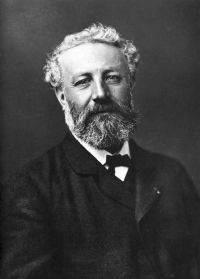
 Jules Verne,
From the Earth to the Moon — Chapter XXIII
Jules Verne,
From the Earth to the Moon — Chapter XXIII
“ There were two things to be done then-- first, to replace the absorbed oxygen; secondly, to destroy the expired carbonic acid; both easy enough to do, by means of chlorate of potassium and caustic potash. The former is a salt which appears under the form of white crystals; when raised to a temperature of 400 degrees it is transformed into chlorure of potassium, and the oxygen which it contains is entirely liberated. Now twenty-eight pounds of chlorate of potassium produces seven pounds of oxygen, or 2,400 litres-- the quantity necessary for the travelers during twenty-four hours. ”
