Summary

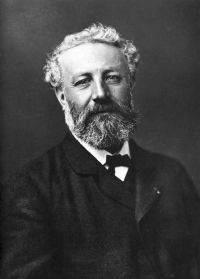
Portrait of Jules Verne Jules Verne In Search of the Castaways; or Captain Grant's Children… (1911)

But Paganel, in a towering rage, would not give up the contest, and turned upon Glenarvan, whose intervention in this jesting manner he resented.
"And so, my Lord, my nervous system is irritated?" he said.
"Yes, Paganel, it is the north wind--a wind which causes many a crime in the Pampas, as the TRAMONTANE does in the Campagna of Rome."
"Crimes!" returned the geographer. "Do I look like a man that would commit crimes?"
Source: Wikisource

Portrait of Jules Verne Jules Verne In Search of the Castaways; or Captain Grant's Children… (1911)

The Patagonian, without understanding the cause, could see that the two friends were quarreling. He began to smile, and said quietly:
"It's the north wind."
"The north wind," exclaimed Paganel; "what's the north wind to do with it?"
"Ah, it is just that," said Glenarvan. "It's the north wind that has put you in a bad temper. I have heard that, in South America, the wind greatly irritates the nervous system."
Source: Wikisource

Portrait of Jules Verne Jules Verne In Search of the Castaways; or Captain Grant's Children… (1911)

The horses were tired out and dying for water, and though their riders had stinted themselves for their sakes, still their ration was very insufficient. The drought was constantly increasing, and the heat none the less for the wind being north, this wind being the simoom of the Pampas.
There was a brief interruption this day to the monotony of the journey. Mulrady, who was in front of the others, rode hastily back to report the approach of a troop of Indians. The news was received with very different feelings by Glenarvan and Thalcave.
Source: Wikisource

Get perspective with Kwize: daily news enlightened by great literature