Summary

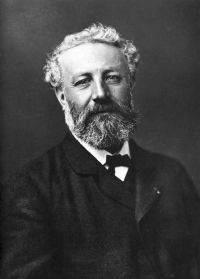
Portrait of Jules Verne Jules Verne In Search of the Castaways; or Captain Grant's Children… (1911)

Glenarvan had supposed Thalcave's refusal of a horse was that he preferred walking, as some guides do, but he was mistaken, for just as they were ready, the Patagonian gave a peculiar whistle, and immediately a magnificent steed of the pure Argentine breed came bounding out of a grove close by, at his master's call. Both in form and color the animal was of perfect beauty. The Major, who was a thorough judge of all the good points of a horse, was loud in admiration of this sample of the Pampas breed, and considered that, in many respects, he greatly resembled an English hunter.
Source: Wikisource

Portrait of Jules Verne Jules Verne In Search of the Castaways; or Captain Grant's Children… (1911)

Paganel was so excited, he could hardly find words, and he gazed at the grave Indian as if he could read the reply on his lips.
Each word spoken by Thalcave was instantly translated, so that the whole party seemed to hear him speak in their mother tongue.
"And what about the prisoner?" asked Paganel.
"He was a foreigner."
"You have seen him?"
"No; but I have heard the Indian speak of him. He is brave; he has the heart of a bull."
"The heart of a bull!" said Paganel. "Ah, this magnificent Patagonian language. You understand him, my friends, he means a courageous man."
Source: Wikisource

Portrait of Jules Verne Jules Verne In Search of the Castaways; or Captain Grant's Children… (1911)

Glenarvan kept a sharp lookout for the appearance of any Indians, intending to question them, through Thalcave, about Captain Grant, as Paganel could not speak to him well enough for this. But the track they were following was one little frequented by the natives, for the ordinary routes across the Pampas lie further north. If by chance some nomadic horseman came in sight far away, he was off again like a dart, not caring to enter into conversation with strangers.
Source: Wikisource

Get perspective with Kwize: daily news enlightened by great literature