Summary

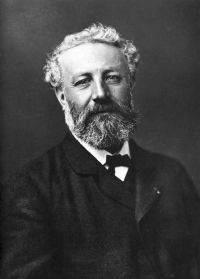
Portrait of Jules Verne Jules Verne In Search of the Castaways; or Captain Grant's Children… (1911)

On the thorny bushes the nests of the ANNUBIS swung to and fro in the breeze like an Indian hammock; and on the shore magnificent flamingos stalked in regular order like soldiers marching, and spread out their flaming red wings. Their nests were seen in groups of thousands, forming a complete town, about a foot high, and resembling a truncated cone in shape. The flamingos did not disturb themselves in the least at the approach of the travelers, but this did not suit Paganel.
Source: Wikisource

Portrait of Jules Verne Jules Verne In Search of the Castaways; or Captain Grant's Children… (1911)

But to the increasing surprise of Thalcave, they did not come across even the shadow of an Indian. About the middle of the day, however, three flying horsemen, well mounted and well armed came in sight, gazed at them for an instant, and then sped away with inconceivable rapidity. Glenarvan was furious.
"Gauchos," said the Patagonian, designating them by the name which had caused such a fiery discussion between the Major and Paganel.
"Ah! the Gauchos," replied McNabbs. "Well, Paganel, the north wind is not blowing to-day. What do you think of those fellows yonder?"
Source: Wikisource

Portrait of Jules Verne Jules Verne In Search of the Castaways; or Captain Grant's Children… (1911)

Not to find an Indian where in general there were only too many, was so unusual that there must be some grave cause for it; but worse still if Harry Grant were a prisoner in the hands of any of those tribes, had be been dragged away with them to the north or south? Glenarvan felt that, cost what it might, they must not lose his track, and therefore decided to follow the advice of Thalcave, and go to the village of Tandil. They would find some one there to speak to, at all events.
Source: Wikisource

Get perspective with Kwize: daily news enlightened by great literature