Summary

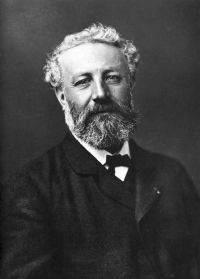
Portrait of Jules Verne Jules Verne In Search of the Castaways; or Captain Grant's Children… (1911)

This unlucky word reminded Lady Helena of the amiable Frenchman's propensity, and made her ask if he had ever fallen into his old habits while they were away. The Major and Glenarvan exchanged smiling glances, and Paganel burst out laughing, and protested on his honor that he would never be caught tripping again once more during the whole voyage. After this prelude, he gave an amusing recital of his disastrous mistake in learning Spanish, and his profound study of Camoens. "After all," he added, "it's an ill wind that blows nobody good, and I don't regret the mistake."
Source: Wikisource

Portrait of Jules Verne Jules Verne In Search of the Castaways; or Captain Grant's Children… (1911)

Glenarvan and Paganel looked at each other silently, struck by the justice of these remarks.
"I should like you, therefore," continued the Major, "before we actually start for Australia, to make one more examination of the documents. Here they are, and here are the charts. Let us take up each point in succession through which the 37th parallel passes, and see if we come across any other country which would agree with the precise indications of the document."
"Nothing can be more easily and quickly done," replied Paganel; "for countries are not very numerous in this latitude, happily."
Source: Wikisource

Portrait of Jules Verne Jules Verne In Search of the Castaways; or Captain Grant's Children… (1911)

He is coming! Oh, father!" exclaimed the young girl. But as the boat came nearer, her illusion was dispelled; all hope forsook her, and she would have sunk in despair, but for the reassuring voice of Glenarvan.
After their mutual embraces were over, Lady Helena, and Mary Grant, and John Mangles, were informed of the principal incidents of the expedition, and especially of the new interpretation of the document, due to the sagacity of Jacques Paganel.
Source: Wikisource

Get perspective with Kwize: daily news enlightened by great literature