Summary

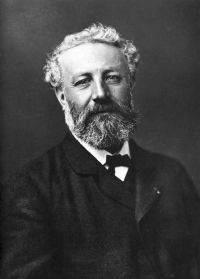
Portrait of Jules Verne Jules Verne Journey into the Interior of the Earth… (1877)

Travellers who penetrate into the wilds of central Africa, and into the pathless forests of the New World, are obliged to watch over each other by night. But we enjoyed absolute safety and utter seclusion; no savages or wild beasts infested these silent depths.
Next morning, we awoke fresh and in good spirits. The road was resumed. As the day before, we followed the path of the lava. It was impossible to tell what rocks we were passing: the tunnel, instead of tending lower, approached more and more nearly to a horizontal direction, I even fancied a slight rise.
Source: Wikisource

Portrait of Jules Verne Jules Verne Journey into the Interior of the Earth… (1877)

The mass was composed of inclined and sometimes vertical strata. We were passing through rocks of the transition or silurian [1] system.
"It is evident," I cried, "the marine deposits formed in the second period, these shales, limestones, and sandstones. We are turning away from the primary granite. We are just as if we were people of Hamburg going to Lubeck by way of Hanover!"
I had better have kept my observations to myself. But my geological instinct was stronger than my prudence, and uncle Liedenbrock heard my exclamation.
Source: Wikisource

Portrait of Jules Verne Jules Verne Journey into the Interior of the Earth… (1877)

Yes; I do, perfectly. We have left the granite and the lava. It is possible that I may be mistaken. But I cannot be sure of that until I have reached the very end of this gallery."
"You are right in doing this, my uncle, and I should quite approve of your determination, if there were not a danger threatening us nearer and nearer."
Source: Wikisource

Get perspective with Kwize: daily news enlightened by great literature