Summary

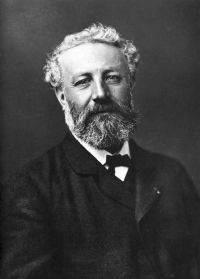
Portrait of Jules Verne Jules Verne Journey into the Interior of the Earth… (1877)

The coal measures owe their origin to this period of profuse vegetation. The yet elastic and yielding crust of the earth obeyed the fluid forces beneath. Thence innumerable fissures and depressions. The plants, sunk underneath the waters, formed by degrees into vast accumulated masses.
Then came the chemical action of nature; in the depths of the seas the vegetable accumulations first became peat; then, acted upon by generated gases and the heat of fermentation, they underwent a process of complete mineralization.
Source: Wikisource

Portrait of Jules Verne Jules Verne Journey into the Interior of the Earth… (1877)

If unfortunately we had explored this gallery with torches, a terrible explosion would have put an end to travelling and travellers at one stroke.
This excursion through the coal mine lasted till night. My uncle scarcely could restrain his impatience at the horizontal road. The darkness, always deep twenty yards before us, prevented us from estimating the length of the gallery; and I was beginning to think it must be endless, when suddenly at six o'clock a wall very unexpectedly stood before us. Right or left, top or bottom, there was no road farther
Source: Wikisource

Portrait of Jules Verne Jules Verne Journey into the Interior of the Earth… (1877)

The beds of coal were separated by strata of sandstone or compact clays, and appeared crushed under the weight of overlying strata.
At the age of the world which preceded the secondary period, the earth was clothed with immense vegetable forms, the product of the double influence of tropical heat and constant moisture; a vapoury atmosphere surrounded the earth, still veiling the direct rays of the sun.
Source: Wikisource

Get perspective with Kwize: daily news enlightened by great literature