Summary

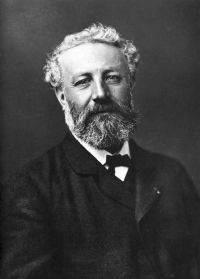
Portrait of Jules Verne Jules Verne,  Michael Strogoff (1876) — Chapter IX (1876)

“ But to what sort of a vehicle should he harness his horses? To a telga or to a tarantass? The telga is nothing but an open four-wheeled cart, made entirely of wood, the pieces fastened together by means of strong rope. Nothing could be more primitive, nothing could be less comfortable; but, on the other hand, should any accident happen on the way, nothing could be more easily repaired. There is no want of firs on the Russian frontier, and axle-trees grow naturally in forests. ”
Source: Wikisource

Portrait of Jules Verne Jules Verne,  Michael Strogoff (1876) — Chapter IX (1876)

“ The "eagle" is the traveler who does not mind expense, to say nothing of liberal tips. Therefore the crow could not claim to fly as rapidly as the imperial bird.
Nadia and Michael immediately took their places in the tarantass. A small store of provisions was put in the box, in case at any time they were delayed in reaching the post-houses, which are very comfortably provided under direction of the State. The hood was pulled up, as it was insupport-ably hot, and at twelve o'clock the tarantass left Perm in a cloud of dust.
”
Source: Wikisource

Portrait of Jules Verne Jules Verne,  Michael Strogoff (1876) — Chapter IX (1876)

“ However, Michael Strogoff and Nadia were not the only travelers on their way from Perm to Ekaterenburg. At the first stages, the courier of the Czar had learnt that a carriage preceded them, but, as there was no want of horses, he did not trouble himself about that.
During the day, halts were made for food alone. At the post-houses could be found lodging and provision. Besides, if there was not an inn, the house of the Russian peasant would have been no less hospitable.
”
Source: Wikisource

Get perspective with Kwize: daily news enlightened by great literature