Summary

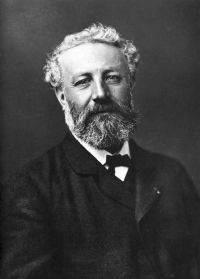
Portrait of Jules Verne Jules Verne The Blockade Runners — V. The Shot from the Iroquois… (1865)

A third shot fell still farther astern, and in less than ten minutes the Dolphin was out of range of the corvette's guns.
"So much for patent-logs, Mr. Mathew," said James Playfair; "thanks to those shot we know how to rate our speed. Now have the fires lowered; it is not worth while to waste our coal uselessly."
"It is a good ship that you command," said Miss Halliburtt to the young Captain.
"Yes, Miss Jenny, my good Dolphin makes her seventeen knots, and before the day is over we shall have lost sight of that corvette."
Source: Wikisource

Portrait of Jules Verne Jules Verne The Blockade Runners — V. The Shot from the Iroquois… (1865)

THE SHOT FROM THE IROQUOIS, AND MISS JENNY'S ARGUMENTS
Until now the navigation of the Dolphin had been very fortunate. Not one ship had been signalled before the sail hailed by the man on watch.
The Dolphin was then in 32° 51' lat., and 57° 43' W. longitude. For forty-eight hours a fog, which now began to rise, had covered the ocean. If this mist favoured the Dolphin by hiding her course, it also prevented any observations at a distance being made, and, without being aware of it, she might be sailing side by side, so to speak, with the ships she wished most to avoid.
Source: Wikisource

Portrait of Jules Verne Jules Verne The Blockade Runners — V. The Shot from the Iroquois… (1865)

At first James argued a great deal, and tried to uphold the Confederates against the Federals, to prove that the Secessionists were in the right, and that if the people were united voluntarily they might separate in the same manner. But the young girl would not yield on this point; she demonstrated that the question of slavery was predominant in the struggle between the North and South Americans, that it was far more a war in the cause of morals and humanity than politics, and James could make no answer.
Source: Wikisource

Get perspective with Kwize: daily news enlightened by great literature