Summary

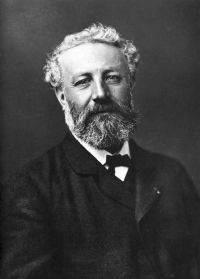
Portrait of Jules Verne Jules Verne,  The Green Ray — Chapter XIII (1883)

“ Sinclair,” asked Miss Campbell, “that any artist, however clever he may be, could reproduce all the beauties of the sea on canvas?”
“No, indeed, Miss Campbell, and how could he? The sea has really no colour of its own; it is but an immense reflection of the sky; if it is blue, it is not a blue that one can paint; if it is green, there is no green that will match it! It should rather be depicted in a tempest, when it is dark, gloomy and livid, when it seems as though sky and sea were blended! Ah! Miss Campbell, the more I see of it, the more I find the ocean sublime!
”
Source: Wikisource

Portrait of Jules Verne Jules Verne,  The Green Ray — Chapter XIII (1883)

“ Mere islands surrounded by its waters! it covers four-fifths of the globe! By incessant circulation, it is nourished by the vapours which it emits. Yes, the ocean is infinite, an infinity one cannot see, but feel, infinite as the space it reflects in its waters, as says one of the poets.”
“I like to hear you speak with such enthusiasm' Mr. Sinclair,” said Miss Campbell, “and I quite share your feelings! Yes, I love the sea as much as you do.”
“And you will not be afraid of braving its perils?” asked Oliver.
“No, indeed, I shall not be afraid! Can one be afraid of what one admires?”
”
Source: Wikisource

Portrait of Jules Verne Jules Verne,  The Green Ray — Chapter XIII (1883)

“ The American coast faces Scotland, and though great storms may rise there, it is the western coast of Europe which gets the first benefit of their fury! But what can they do against our Hebrides, which are not like that man of whom Livingstone speaks, who had no fear of lions, but was afraid of the sea? These isles, with their solid granite bases, can laugh to scorn the violence of wind and sea. ”
Source: Wikisource

Get perspective with Kwize: daily news enlightened by great literature