Summary

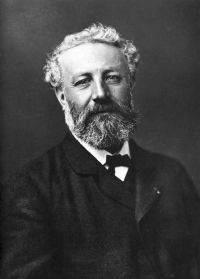
Portrait of Jules Verne Jules Verne The Master of the World — Chapter 11 (1904)

Eager as we all were for action, it was evidently best to do as Wells suggested and wait for night. The intervening time could well be occupied as he said. Leading the horses by the bridle, while they dragged the empty carriage, we proceeded through the heavy woods. The tall pines, the stalwart oaks, the cypress scattered here and there, made the evening darker overhead. Beneath our feet spread a carpet of scattered herbs, pine needles and dead leaves.
Source: Wikisource

Portrait of Jules Verne Jules Verne The Master of the World — Chapter 11 (1904)

Strock," said he. "We had better leave the carriage deeper in the woods, where there will be no chance whatever of our being seen."
"Can the carriage drive under these trees?"
"It can," declared Wells. "I have already explored these woods thoroughly. Five or six hundred feet from here, there is a little clearing, where we will be completely hidden, and where our horses may find pasture. Then, as soon as it is dark, we will go down to the beach, at the edge of the rocks which shut in the mouth of the creek. Thus if the Terror is still there, we shall stand between her and escape."
Source: Wikisource

Portrait of Jules Verne Jules Verne The Master of the World — Chapter 11 (1904)

Either the commander of the Terror would be surprised before he had a chance to escape, or he would take to flight and we must give up all hope of arresting him.
I found Arthur Wells to be a man of about forty, large and powerful. I knew him by reputation to be one of the best of our local police agents. Cool in danger and enterprising always, he had proven his daring on more than one occasion at the peril of his life. He had been in Toledo on a wholly different mission, when chance had thrown him on the track of the Terror.
We drove rapidly along the shore of Lake Erie, toward the southwest.
Source: Wikisource

Get perspective with Kwize: daily news enlightened by great literature