Summary

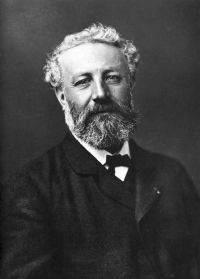
Portrait of Jules Verne Jules Verne The Voyages and Adventures of Captain Hatteras…

Hatteras waited impatiently for milder weather; he frequently consulted the barometer, but no confidence could be placed in this instrument, which in these high latitudes seems to lose some of its customary accuracy; in these regions there are many exceptions to the general laws of nature: for instance, a clear sky was not always accompanied by cold, nor did a fall of snow raise the temperature; the barometer was uncertain, as many explorers in these seas have noticed; it used to fall when the wind was from the north or east; when low it foretold fine weather; when high, rain or snow.
Source: Wikisource

Portrait of Jules Verne Jules Verne The Voyages and Adventures of Captain Hatteras…

Johnson took special care of the preparation of snow-shoes, with their wooden frames and leathern straps; they served as skates; on thoroughly frozen spots deerskin moccasins could be worn with comfort; every man carried two pairs of each.
These preparations, which were so important because the omission of a single detail might have caused the ruin of the whole expedition, required four whole days. Every day at noon Hatteras took an observation of the ship's position
Source: Wikisource

Portrait of Jules Verne Jules Verne The Voyages and Adventures of Captain Hatteras…

James Wall was too ill to go. The sick grew no worse; their treatment consisted of repeated rubbing and strong doses of lemon-juice; this was easily seen to without th presence of the doctor being essential. Hence he enrolled himself among those who should go, and no voice was raised against it. Johnson would have gladly gone with the captain in his dangerous expedition; but Hatteras drew him to one side and said to him in an affectionate, almost weeping voice,—
“Johnson, you are the only man I can trust. You are the only officer with whom I can leave the ship.
Source: Wikisource

Get perspective with Kwize: daily news enlightened by great literature