Summary

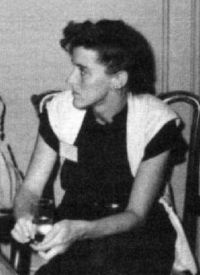
Portrait of Katherine MacLean Katherine MacLean The Man Who Staked the Stars

A man is what he wants. But what he wanted could be changed. How easy had it been to change him. Bryce tried himself with a thought of the power and glory of rule, the reign and mastery of space—a goal that had warmed his thoughts for many years.
He didn't want it.
There was a numbness where there should have been emotion, and all he could feel for his loss was the resignation and the faint bitter humor permitted him by Pierce's smile. Watching that smile he shifted the heavy little gun in his hand, turning it over casually, feeling its familiar weight and the texture of its surfaces.
Source: Gutenberg

Portrait of Katherine MacLean Katherine MacLean The Man Who Staked the Stars

So, in an enlightened clean and wealthy world, Bryce Carter had grown up in a slum whose swarming viciousness was a matter of take, steal, kill, climb or die. Perhaps under those special circumstances police penal compulsion had to be brutally strong, stronger than the drive for life itself, as brutal as the lurid tales he had heard. Perhaps in other countries the methods were different, a hypno-converted man not a horror to his friends, but he had had no time to study and investigate if it were so, and the horror and hatred remained.
Source: Gutenberg

Portrait of Katherine MacLean Katherine MacLean The Man Who Staked the Stars

Bryce's earphones picked up Pierce's voice again. "Frontier-born nations always look back and say that the first years were the best."
The words caught at something Bryce had felt before. He looked at Earth hanging splendidly in space. It was beautiful and he was fond of it, but—He said, "I don't think we'll ever go back." Nor would mankind itself. Never again—through all conquests from this point in time—would mankind go back down into the mesh of gravity to be a thin film over the surface of a planet.
"Give old Earth a smile, Bryce, we've hatched."
Source: Gutenberg

Get perspective with Kwize: daily news enlightened by great literature