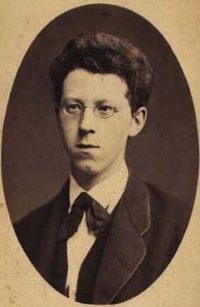
Kristoffer Nyrop

Kristoffer Nyrop

Summary

Portrait of Kristoffer Nyrop Kristoffer Nyrop The Kiss and its History (1902)

I marked how the loving mother once again embraced her and bade her farewell; I heard her say: 'Go out into the world now, my child; I have done all for you. Now take this kiss as a seal upon your lips; 'tis a seal the sanctuary preserves; no one can break it against your own will, but when the right man comes, you shall understand him.' And she presses a kiss on her lips—a kiss which, not like a human kiss, takes aught, but a divine kiss that gives all." The chaste purity, which is Cordelia's halo and protection, is, as it were, the reflection of a mother's kiss.
Source: Wikisource

Portrait of Kristoffer Nyrop Kristoffer Nyrop The Kiss and its History

Alfred Grandidier, a French traveller, says of the nose-kiss in Madagascar: “It always excites the merriment of Europeans, and yet it has its origin in an extremely refined idea. The invisible air which is continually being breathed through the lips is to savages, not only, as with us, a sign of life, but it is also an emanation of the soul—its perfume, as they themselves say—and, when they mingle and suck in each other’s breath and odour, they think they are actually mingling their souls.”
Source: Gutenberg

Portrait of Kristoffer Nyrop Kristoffer Nyrop The Kiss and its History

Impelled, as it were, by some irresistible force, Daphnis wanders back to Chloe; he finds her asleep, but dares not awake her: “See how her eyes slumber and her mouth breathes. The scent of apple-blossoms is not so delicious as her breath. But I dare not kiss her. Her kiss stings me to the heart, and drives me as mad as if I had eaten fresh honey.” Daphnis’ fear of kisses disappears, however, later on, directly his simplicity has made room for greater selfconsciousness.
Source: Gutenberg

Get perspective with Kwize: daily news enlightened by great literature