Summary

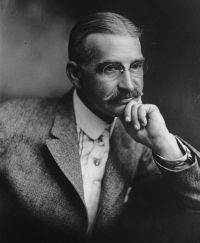
Portrait of L. Frank Baum L. Frank Baum Aunt Jane's Nieces in the Red Cross… (1915)

And then there was a sudden rending, blinding, terrifying crash that sent the world into a thousand shrieking echoes. A huge shell had fallen not fifty feet away, plowing its way through the earthworks above. Its explosion sent timbers, abandoned gun-carriages, everything, flying through the air. And one great piece of wood caught Patsy a glancing blow on the back of her head as she crouched over the wounded Belgian. With a weak cry she toppled over, not unconscious, but unable to raise herself.
Source: Wikisource

Portrait of L. Frank Baum L. Frank Baum Aunt Jane's Nieces in the Red Cross… (1915)

Realizing this, the Germans had not risked an attack, but after long study of the defences had decided that by means of artillery they might shell the Belgians, who held the dunes, and destroy them as they lay in the hollows. So a heavy battery had been planted along the German lines for this work, while in defence the Belgians confronted them with their own famous dog artillery, consisting of the deadly machine guns. The battle of December twentieth therefore began with an artillery duel, resulting in so many casualties that the Red Cross workers found themselves fully occupied.
Source: Wikisource

Portrait of L. Frank Baum L. Frank Baum Aunt Jane's Nieces in the Red Cross… (1915)

The Belgians had entrenched these dunes in an elaborate and clever manner, shoveling the sand into a series of high lateral ridges, with alternate hollows, which reached for miles along the coast. The hollows were from six to eight feet deep, affording protection to the soldiers, who could nevertheless fire upon the enemy by creeping up the sloping embankments until their heads projected sufficiently to allow them to aim, when they could drop back to safety.
Source: Wikisource

Get perspective with Kwize: daily news enlightened by great literature