Summary

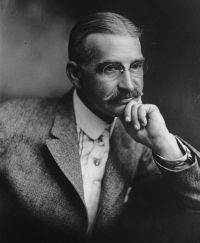
Portrait of L. Frank Baum L. Frank Baum Mary Louise — XVIII. MARY LOUISE GROWS SUSPICIOUS (1916)

Irene was disturbed by the question but was resolved not to show it.
"To get the letter that was in it—the letter you would not let me read."
"What are your affairs to Agatha Lord?"
"I wish I knew," said Mary Louise, musingly. "Irene, I've an idea she came to Bigbee's just to be near us. There's something stealthy and underhanded about our neighbors, I'm positive. Miss Lord is a very delightful woman, on the surface, but—"
Irene laughed softly, as if amused.
Source: Wikisource

Portrait of L. Frank Baum L. Frank Baum Mary Louise — XVIII. MARY LOUISE GROWS SUSPICIOUS (1916)

Then she gave a little shake of her head and drove away.
"There's something queer about the folks at Bigbee's," Mary Louise confided to Irene, as she went to her friend's room to assist her in preparing for bed. "Agatha Lord kept looking at that velvet ribbon around your neck, to-night, as if she couldn't keep her eyes off it, and this afternoon she seemed scared by the news of Sarah Judd's arrival and wasn't happy until she had seen her. Then, again, that queer maid of Agatha's, Susan, drove us home so she could see Sarah Judd for herself. How do you account for all that, Irene?"
Source: Wikisource

Portrait of L. Frank Baum L. Frank Baum Mary Louise — XVIII. MARY LOUISE GROWS SUSPICIOUS (1916)

That Sunday evening they all went down to the Bigbee place in Miss Lord's motor car, where the lady entertained her guests at a charming luncheon. The Bigbee place was more extensive than Hillcrest Lodge, as it consisted of a big, rambling residence and numerous outbuildings; but it was not nearly so cosy or homelike, nor so pleasantly situated.
Miss Lord's maid, Susan, was somewhat a mystery to the Hillcrest people. She dressed almost as elaborately as her mistress and performed her duties grudgingly and with a scowl that seemed to resent Miss Lord's entertaining company.
Source: Wikisource

Get perspective with Kwize: daily news enlightened by great literature