Summary

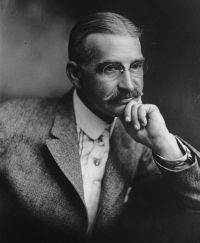
Portrait of L. Frank Baum L. Frank Baum Mary Louise in the Country — II. THE KENTON PLACE (1916)

Beside the porch door stood a washtub on edge; a few scraggly looking chickens wandered through the yard; if not an abode of poverty it was surely a place where careless indifference to either beauty or the comfort of orderly living prevailed.
So much Mary Louise had observed, wondering why Mrs. Kenton had not bought the cottage and torn it down, since it was a blot on the surrounding landscape, when she saw the door open and a man come out.
Source: Wikisource

Portrait of L. Frank Baum L. Frank Baum Mary Louise in the Country — II. THE KENTON PLACE (1916)

When the spring freshets were on perhaps the stream reached its banks, but in the summer months it was usually subdued as now. The banks were four feet or more above the rabble of stones below, and close to the bank, facing the river on her side, Mrs. Kenton had built a pretty pavilion with ample seats and room for half a dozen wicker chairs and a table, where one could sit and overlook the water. Mary Louise fervently blessed the old lady for this idea and at once seated herself in the pavilion while she examined at leisure the scene spread out before her.
Source: Wikisource

Portrait of L. Frank Baum L. Frank Baum Mary Louise in the Country — II. THE KENTON PLACE (1916)

Kenton, some fifteen years ago, and is still called 'the Kenton Place.' Mrs. Kenton died and her daughter, who married a city man named Joselyn, has used it as a summer home until this year. I think Mrs. Joselyn is a woman of considerable means."
"The furnishings prove that," said Mary Louise. "They're not all in the best of taste, but they are plentiful and meant to be luxurious. Why doesn't Mrs. Joselyn occupy her home this summer? And why, if she is wealthy, does she rent the place?"
Source: Wikisource

Get perspective with Kwize: daily news enlightened by great literature