Summary

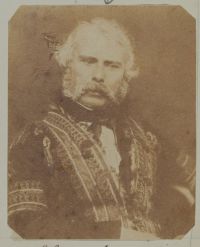
Portrait of John McCosh John McCosh Advice to Officers in India — Chapter 15 (1856)

CAPE TOWN.—On arriving at Cape Town, the stranger will do wisely to leave it as soon as possible. He will find the heat great, the glare of the sun dazzling, the wind and dust most annoying, the mosquitoes tormenting, the hotels most uncomfortable; indeed,he will think he has made but a bad exchange of climate, and fancy he might as well have remained in India.
Let him at once go out to Rondebush or Wynberg, and there look out for quarters, and settle down at once. Furnished houses and boarding-houses are there to be got in abundance.
Source: Wikisource

Portrait of John McCosh John McCosh Advice to Officers in India — Chapter 15 (1856)

WYNBERG.—Wynberg is the principal residence of visitors from India, who, of themselves, form a large society, and the new comer will soon find himself at home among them. It is also the residence of most of the officers holding Government employment, who live on friendly terms with their visitors. Wynberg may be called the Auburn of the Cape. Every house is hid in a boundless "contiguity of shade" of oaks and pines, and poplars and willows, perfumed with a profusion of flowers
Source: Wikisource

Portrait of John McCosh John McCosh Advice to Officers in India — Chapter 15 (1856)

Agriculture is little attended to; wool of very fine staple is the chief product of the farm; yet the sod is so poor that it requires a thousand acres to feed a thousand merinos. Withal, the climate of the Cape is a very fine one, and well calculated to restore the constitution of most people, broken by along residence in India; the fresh clear complexions, the firmness and elasticity in the gait of the fair maids of the Cape, and the bone and muscle and stalwart frames of the men prove that no degeneration has taken place amongst them.
Source: Wikisource

Get perspective with Kwize: daily news enlightened by great literature