Summary

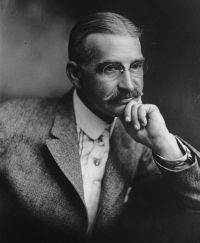
Portrait of L. Frank Baum L. Frank Baum The Tin Woodman of Oz — Chapter 22… (1918)

They looked down, shamefaced, for a moment, and then the Tin Woodman explained in an earnest voice:
"I rusted."
"So did I," said the Tin Soldier.
"I could not know that, of course," asserted Nimmie Amee. "All I knew was that neither of you came to marry me, as you had promised to do. But men are not scarce in the Land of Oz. After I came here to live, I met Mr. Chopfyt, and he was the more interesting because he reminded me strongly of both of you, as you were before you became tin. He even had a tin arm, and that reminded me of you the more.
Source: Wikisource

Portrait of L. Frank Baum L. Frank Baum The Tin Woodman of Oz — Chapter 22… (1918)

They looked at her bewildered, for the facts in the case were too puzzling to be grasped at once.
"It is all the fault of old Ku-Klip," muttered the Tin Woodman. "He had no right to use our castoff parts to make another man with."
"It seems he did it, however," said Nimmie Amee calmly, "and I married him because he resembled you both. I won't say he is a husband to be proud of, because he has a mixed nature and isn't always an agreeable companion. There are times when I have to chide him gently, both with my tongue and with my broomstick. But he is my husband, and I must make the best of him."
Source: Wikisource

Portrait of L. Frank Baum L. Frank Baum The Tin Woodman of Oz — Chapter 22… (1918)

I think I'll keep the husband I now have. He is now trained to draw the water and carry in the wood and hoe the cabbages and weed the flower-beds and dust the furniture and perform many tasks of a like character. A new husband would have to be scolded—and gently chided—until he learns my ways. So I think it will be better to keep my Chopfyt, and I see no reason why you should object to him. You two gentlemen threw him away when you became tin, because you had no further use for him, so you cannot justly claim him now.
Source: Wikisource

Get perspective with Kwize: daily news enlightened by great literature