Summary

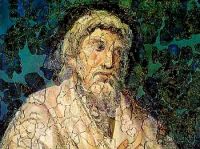
Portrait of Lactantius Lactantius Ante-Nicene Fathers Vol. VII, The Divine Institutes… (1885)

What can I here deplore in so great a crime? or in what words can I lament such great wickedness? For we are not relating the crucifixion of Gavius, [10] which Marcus Tullius followed up with all the spirit and strength of his eloquence, pouring forth as it were the fountains of all his genius, proclaiming that it was an unworthy deed that a Roman citizen should be crucified in violation of all laws. And although He was innocent, and undeserving of that punishment, yet He was put to death, and that, too, by an impious man, who was ignorant of justice.
Source: Wikisource

Portrait of Lactantius Lactantius Ante-Nicene Fathers Vol. VII, The Divine Institutes… (1885)

Pilate did indeed say to the Jews, “Take ye Him, and judge Him according to your law;” but they declared that it was not lawful for them to put any man to death. The punishment was entirely Roman, the mode of death Roman, the executioners Roman soldiers. There were two distinct trials,—one before the Jewish Sanhedrim on a charge of impiety, the other before the Roman governor on a charge of treason.
Source: Wikisource

Portrait of Lactantius Lactantius Ante-Nicene Fathers Vol. VII, The Divine Institutes… (1885)

From which it appears that the Jews had no other hope, unless they purified themselves from blood, and put their hopes in that very person whom they denied. [25] Isaiah also points out their deed, and says: [26] “In His humiliation His judgment was taken away. Who shall declare His generation? for His life shall be taken away from the earth; from the transgressions of my people He was led away to death. And I will give Him the wicked for His burial, and the rich for His death, because He did no wickedness, nor spoke guile with His mouth.
Source: Wikisource

Get perspective with Kwize: daily news enlightened by great literature