Summary

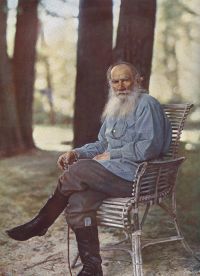
Portrait of Leo Tolstoy Leo Tolstoy Childhood (Tolstoy) — After the Mazurka

I thought, "I might yet be able to please people with my looks." Yet as soon as I glanced at my partner's face again, and saw there not only the expression of happiness, health, and good temper which had just pleased me in my own, but also a fresh and enchanting beauty besides, I felt dissatisfied with myself again. I understood how silly of me it was to hope to attract the attention of such a wonderful being as Sonetchka. I could not hope for reciprocity--could not even think of it, yet my heart was overflowing with happiness.
Source: Wikisource

Portrait of Leo Tolstoy Leo Tolstoy Childhood (Tolstoy) — After the Mazurka

I could not imagine that the feeling of love which was filling my soul so pleasantly could require any happiness still greater, or wish for more than that that happiness should never cease. I felt perfectly contented. My heart beat like that of a dove, with the blood constantly flowing back to it, and I almost wept for joy.
As we passed through the hall and peered into a little dark store-room beneath the staircase I thought: "What bliss it would be if I could pass the rest of my life with her in that dark corner, and never let anybody know that we were there!"
Source: Wikisource

Portrait of Leo Tolstoy Leo Tolstoy Childhood (Tolstoy) — After the Mazurka

Sonetchka went on persuasively.
"Well, what if I should be ill to-morrow through all this dissipation?" rejoined her mother, and was incautious enough to smile.
"There! You DO consent, and we CAN stay after all!" exclaimed Sonetchka, jumping for joy.
"What is to be done with such a girl?" said Madame. "Well, run away and dance. See," she added on perceiving myself, "here is a cavalier ready waiting for you."
Sonetchka gave me her hand, and we darted off to the salon, The wine, added to Sonetchka's presence and gaiety, had at once made me forget all about the unfortunate end of the mazurka.
Source: Wikisource

Get perspective with Kwize: daily news enlightened by great literature