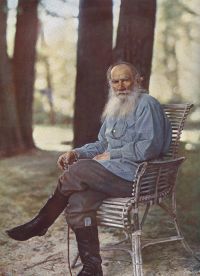
Leo Tolstoy

Leo Tolstoy

Summary

Portrait of Leo Tolstoy Leo Tolstoy,  The Cossacks — Chapter XXVI (1863)

“ Is the wish to be a simple Cossack, to live close to nature, not to injure anyone but even to do good to others, more stupid than my former dreams, such as those of becoming a minister of state or a colonel?' but a voice seemed to say that he should wait, and not take any decision. He was held back by a dim consciousness that he could not live altogether like Eroshka and Lukashka because he had a different idea of happiness—he was held back by the thought that happiness lies in self-sacrifice. ”
Source: Wikisource

Portrait of Leo Tolstoy Leo Tolstoy,  The Cossacks — Chapter XXVI (1863)

“ He had found nothing at all like his dreams, nor like the descriptions of the Caucasus he had heard and read. 'There are none of all those chestnut steeds, precipices, Amalet Beks, heroes or villains,' thought he. 'The people live as nature lives: they die, are born, unite, and more are born—they fight, eat and drink, rejoice and die, without any restrictions but those that nature imposes on sun and grass, on animal and tree. ”
Source: Wikisource

Portrait of Leo Tolstoy Leo Tolstoy,  The Cossacks — Chapter XXVI (1863)

“ He kept looking for occasions to sacrifice himself for others, but did not meet with them. Sometimes he forgot this newly discovered recipe for happiness and considered himself capable of identifying his life with Daddy Eroshka's, but then he quickly bethought himself and promptly clutched at the idea of conscious self-sacrifice, and from that basis looked calmly and proudly at all men and at their happiness. ”
Source: Wikisource

Get perspective with Kwize: daily news enlightened by great literature