Summary

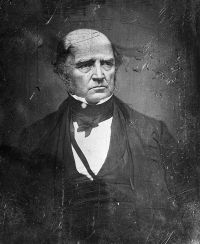
Portrait of Levi Woodbury Levi Woodbury Le Roy v. Beard — Opinion of the Court

That any instrument, to which the person making the same shall affix any device by way of seal, shall be adjudged and held to be of the same force and obligation as if it were actually sealed.'
The counsel for the defendant then prayed the court to instruct the jury, among other things, that no action can be sustained against the defendant in this suit, because the power of attorney executed by the defendant to Elisha Starr, did not authorize Elisha Starr to warrant the title of the defendant to any lands which might be sold by him under said power of attorney.
Source: Wikisource

Portrait of Levi Woodbury Levi Woodbury Le Roy v. Beard — Opinion of the Court

Le Roy resided in New York, and Starr was to act as his attorney in buying and selling lands in the 'Western states and territories,' and this very sale was as remote as Milwaukie, in Wisconsin. For aught which appears, Le Roy, Beard, and Starr were all strangers there, and the true title to the soil little known to them, and hence they would expect to be required to give warranties when selling, and would be likely to demand them when buying.
The usages of this country are believed, also, to be very uniform to insert covenants in deeds.
Source: Wikisource

Portrait of Levi Woodbury Levi Woodbury Le Roy v. Beard — Opinion of the Court

II. The form of action, being in assumpsit, was right: an action of covenant could not have been sustained in the state of New York.
The first count is special, founded on the instrument of conveyance. The second is also special, but more general, and the third contains the common money counts.
The instrument of conveyance executed by Le Roy's agent, has the form and language of a deed with covenants, but has no seal, a scroll being used in place of a seal.
Source: Wikisource

Get perspective with Kwize: daily news enlightened by great literature