Summary

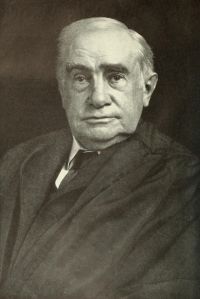
Portrait of Henry Billings Brown Henry Billings Brown Maxwell Land-Grant Company v. Dawson…

But, however this may be, and giving full force and effect to all that is claimed for the civil law in this particular, it is very clear that there was no such identification of the land, delimitation of the boundaries, and delivery of possession as were necessary, under the most liberal construction of the civil law, to convey a title. The testimony as to any contract which Maulding and Curtis may have had with Maxwell with regard to the large 'block of land,' of which a portion claimed by the defendant was a part, was not only hearsay, but hearsay of the loosest description.
Source: Wikisource

Portrait of Henry Billings Brown Henry Billings Brown Maxwell Land-Grant Company v. Dawson…

If he had purchased all the land he now claims, it is very improbable he would have accepted a deed with this limited and ambiguous description. If he has any title to the territory claimed in his plea, it must be a title by adverse possession. This was evidently the theory upon which he tried his case, though, after the deed was introduced, against his objection, he apparently shifted his ground, and endeavored to reconcile his claim with the vague description in his deed. It is impossible, however, under any theory of construction, to give it that effect.
Source: Wikisource

Portrait of Henry Billings Brown Henry Billings Brown Maxwell Land-Grant Company v. Dawson…

There appears to be a diversity of opinion upon the point. Upon the one hand the supreme court of California, which state also inherited the civil law from Mexico, has uniformly held that a conveyance of land resting solely upon parol was void by that law. In Hoen v. Simmons, 1 Cal. 119, it is said that by the Recopilacion de las Indias, Law 29, Lib. 8, tit. 13, (a code of the sixteenth century,) every sale of real estate was required to be made before the escribano (notary) of the place where the contract was entered into, and, if there were no escribano, before the judge of first instance
Source: Wikisource

Get perspective with Kwize: daily news enlightened by great literature