Summary

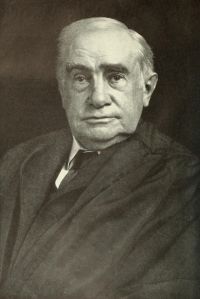
Portrait of Henry Billings Brown Henry Billings Brown Wehrman v. Conklin — Opinion of the Court

At common law a party might by successive fictitious demises bring as many actions of ejectment as he chose, and a bill to quiet title was only permitted for the purpose of preventing the party in possession being annoyed by repeated and vexatious actions. The jurisdiction was, in fact, only another exercise of the familiar power of a court of equity to prevent a multiplicity of suits by bills of peace.
Source: Wikisource

Portrait of Henry Billings Brown Henry Billings Brown Wehrman v. Conklin — Opinion of the Court

No lapse of time can avail the complainant, unless it be a bar to the defendant's title under the statute of limitations. This defense will avail the defendant at law as well as in equity, and constitutes no ground for enjoining proceedings at law.' Had Wehrman seen fit to resort to a court of equity in assertion of his rights, undoubtedly the defendants to such suit might have interposed the defense of laches, but it is quite a different question whether it could be made the basis of a bill.
Source: Wikisource

Portrait of Henry Billings Brown Henry Billings Brown Wehrman v. Conklin — Opinion of the Court

This method of adjusting titles by bill in equity proved so convenient that in many of the states statutes have been passed extending the jurisdiction of a court of equity to all cases where a party in possession, and sometimes out of possession, seeks to clear up his title and remove any cloud caused by an outstanding deed or lien which he claims to be invalid, and the existence of which is a threat against his peaceable occupation of the land, and an obstacle to its sale.
Source: Wikisource

Get perspective with Kwize: daily news enlightened by great literature