Summary

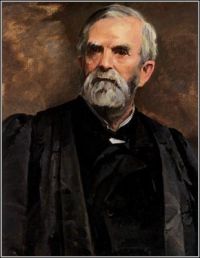
Portrait of William Burnham Woods William Burnham Woods Stebbins v. Duncan — Opinion of the Court

The plaintiffs did not offer oral evidence of the contents of the depositions, but offered copies which were admitted by counsel for defendant to be true copies. It was, therefore, not necessary to retake the depositions or to prove the death of the witnesses, or their incapacity to testify. The copy of the deposition was, by consent, substituted for the original, which was proven to have been destroyed, and, being admitted to be a true copy, spoke for itself. It was, therefore, properly received in evidence.
Source: Wikisource

Portrait of William Burnham Woods William Burnham Woods Stebbins v. Duncan — Opinion of the Court

It certainly cannot be the fair construction of the statute that a party may stand by and see the suggestion of the death of the opposing party entered of record, and his heir or devisee substituted in his stead, and upon final trial require further proof of the death, at least without some notice of his purpose to raise that particular issue. The death of the plaintiff, after the order of the court, may be considered as settled between the parties for that case, unless some motion is made or issue raised on the part of the defendant by which the fact of the death is controverted.
Source: Wikisource

Portrait of William Burnham Woods William Burnham Woods Stebbins v. Duncan — Opinion of the Court

It was further objected to the admission in evidence of the proof relating to the deed of John J. Dunbar to Prout, that as the testimony to establish its execution was the proof of the handwriting of subscribing witnesses, it was necessary to prove the identity of the grantor in the deed; that is to say, that the John J. Dunbar by whom the deed purported to be executed was the same John J. Dunbar named in the patent for the lands in controversy. In any case slight proof of identity is sufficient.
Source: Wikisource

Get perspective with Kwize: daily news enlightened by great literature