Summary

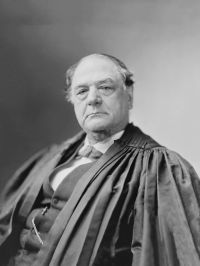
Portrait of Noah Haynes Swayne Noah Haynes Swayne Burton v. Driggs — Opinion of the Court

But there are good reasons why this doctrine should not be extended to the case of lost deposition; as—
1st. The statutes authorizing the use of depositions in cases at law, are variant from common law, and imply the existence of a better kind of evidence, viz., the testimony of the witness in open court; and allow depositions only in peculiar cases, and to prevent a possible failure of justice. As far, therefore, as the statute goes we may follow, but no further. Depositions themselves are regarded as only secondary evidence.
Source: Wikisource

Portrait of Noah Haynes Swayne Noah Haynes Swayne Burton v. Driggs — Opinion of the Court

The Federal courts have ever held parties to strict conformity to the statutes authorizing and prescribing the occasions, mode, and form of taking depositions. No statute of Congress-no decision-authorizes the use, as evidence, of a copy of a deposition, where the original is lost. The action of the court below must rest, for its justification, upon the common-law doctrine, that secondary evidence is admissible, when the primary cannot be had-as, parol evidence of the contents of a lost writing.
Source: Wikisource

Get perspective with Kwize: daily news enlightened by great literature