Summary

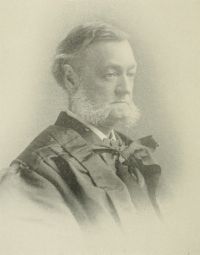
Portrait of George Shiras, Jr. George Shiras, Jr. Mattox v. United States (156 U.S. 237…

If the evidence tending to show that the testimony of an essential witness cannot be relied on because he has made contradictory statements elsewhere, and at other times, is valid and admissible, as the authorities all concede, why should the right to put in such evidence be destroyed by the incidental fact that the witness, by reason of death, cannot be produced to deny or to admit that he made such statements? Does not the necessity call for a relaxation of the rule in such a case?
Source: Wikisource

Portrait of George Shiras, Jr. George Shiras, Jr. Mattox v. United States (156 U.S. 237…

It is, doubtless, the general rule in the trial of both civil and criminal cases that, before testimony can be introduced to discredit a witness by showing that at another time and place he had made statements inconsistent with those made at the trial, he must be asked whether he had made such statements This is to give the witness an opportunity either to deny that he made the statements attributed to him, or to explain by showing that such statements, though made, were reconcilable with his testimony, or perhaps to withdraw or modify his testimony in the light of a refreshed recollection.
Source: Wikisource

Portrait of George Shiras, Jr. George Shiras, Jr. Mattox v. United States (156 U.S. 237…

They testify under the sanction of an oath, and of a liability to punishment for bearing false witness. On the other hand, the witness, the notes of whose testimony are relied on as sufficient to secure a conviction of the accused, is no longer within the reach of human justice.
To conclude: The rule that a witness must be cross-examined as to his contradictory statements before they are given in evidence to impeach his credit is a rule of convenient and orderly practice, and not a rule of the competency of the evidence.
Source: Wikisource

Get perspective with Kwize: daily news enlightened by great literature