Summary

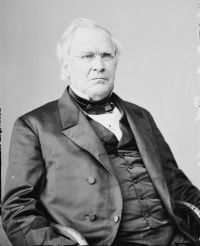
Portrait of Robert Cooper Grier Robert Cooper Grier Walsh v. Rogers — Opinion of the Court

If confidence can be placed in human testimony, it is plain that the libellants are not entitled to the judgment of the court in their favor.
Indeed, the only argument which has been urged against this overwhelming mass of testimony is, that the numerous witnesses of respondents coincide so completely in all the circumstances and facts related, not only in their order of narration, but in their language and phraseology, that it leads to the suspicion of a factitious story, got up after consultation.
Source: Wikisource

Portrait of Robert Cooper Grier Robert Cooper Grier Walsh v. Rogers — Opinion of the Court

The person who prepares the witness and examines him can generally have just so much or so little of the truth, or such a version of it, as will suit his case. In closely-contested cases, of fact, testimony thus obtained must always be unsatisfactory and liable to suspicion, especially if the party has had time and opportunity to take it in the regular way.
Source: Wikisource

Portrait of Robert Cooper Grier Robert Cooper Grier Walsh v. Rogers — Opinion of the Court

The pilot and crew of each boat feel bound to exonerate themselves from blame, and consequently cannot be expected to give a very candid statement of the facts. In such cases the oral examination of witnesses before the court, with a stringent cross-examination by skilful counsel, is almost the only method of eliciting truth from such sources.
Source: Wikisource

Get perspective with Kwize: daily news enlightened by great literature