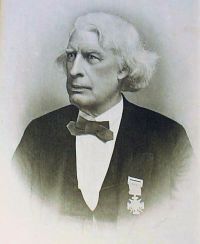
Albert Mackey

Albert Mackey

Summary

Portrait of Albert Mackey Albert Mackey The Principles of Masonic Law… (1856 | portal)

But whenever it is clearly apparent that the interests of a witness would be greatly benefited by either the acquittal or the conviction of the accused, his testimony must be entirely rejected, or, if admitted, its value must be weighed with the most scrupulous caution.
Such are the rules that the wisdom of successive generations of men, learned in the law, have adopted for the establishment of the competency or incompetency of witnesses. There is nothing in them which conflicts with the principles of justice, or with the Constitutions of Freemasonry
Source: Wikisource

Portrait of Albert Mackey Albert Mackey The Principles of Masonic Law… (1856 | portal)

Persons who have been rendered infamous by their conviction of great crimes, are deemed incompetent to give evidence. This rule has been adopted, because the commission of an infamous crime implies, as Sir William Scott has observed, "such a dereliction of moral principle on the part of the witness, as carries with it the conclusion that he would entirely disregard the obligation of an oath."
Source: Wikisource

Portrait of Albert Mackey Albert Mackey The Principles of Masonic Law… (1856 | portal)

Now, if A, who is a Freemason, shall have committed an offense, of which B and C alone were cognizant as witnesses, shall it be said that A must be acquitted for want of proof, because B and C are not members of the Order? We apprehend that in this instance the ends of justice would be defeated, rather than subserved. If the veracity and honesty of B and C are unimpeached, their testimony as to the fact cannot lawfully be rejected on any ground, except that they may be interested in the result of the trial, and might be benefited by the conviction or the acquittal of the defendant.
Source: Wikisource

Get perspective with Kwize: daily news enlightened by great literature