Summary

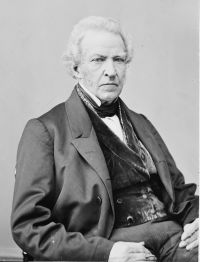
Portrait of James Moore Wayne James Moore Wayne United States v. Wood (39 U.S. 430…

A defendant in two answers to a bill in equity, swears unequivocally to a fact, and as positively against it. A document is produced executed by himself, decisive of the truth of the fact. In such a case can a living witness be wanted; or could any number of living witnesses prove, more certainly, the false swearing than it would be proved by the document and the defendant's contradictory oaths? Or, take the case of defendant being sued in equity, to recover from him the contents of a lost bond.
Source: Wikisource

Portrait of James Moore Wayne James Moore Wayne United States v. Wood (39 U.S. 430…

We do not think any change in the rule necessary. The question is, when and how the rule is to be applied, that it may not, from a technical interpretation, or positive undeviating adherence to words, exclude all other testimony as strong and conclusive as that which the rule requires. It is a right rule, founded upon that principle of natural justice which will not permit one of two persons, both speaking under the sanction of an oath, and, presumptively, entitled to the same credit, to convict the other of false swearing, particularly when punishment is to follow.
Source: Wikisource

Portrait of James Moore Wayne James Moore Wayne United States v. Wood (39 U.S. 430…

Therefore, to convict a man of perjury probable or credible evidence, is not enough; but it must be a strong and clear evidence, and more numerous than the evidence given for the defendant, for else it is only oath against oath. A mistake is not enough to convict a man of perjury; the oath must not only be false, but wilful and malicious.' 10 Mod. 193.
In Hawkins' Pleas of the Crown, vol. ii. ch. 46, p. 591, 'On an indictment for perjury, the evidence of one witness is not sufficient, because then there would only be one oath against another.' Citing 10 Mod.
Source: Wikisource

Get perspective with Kwize: daily news enlightened by great literature