Summary

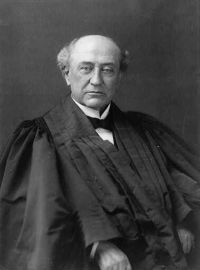
Portrait of David Josiah Brewer David Josiah Brewer Benson v. United States — Opinion of the Court

Indeed, the theory of the common law was to admit to the witness stand only those presumably honest, appreciating the sanctity of an oath, unaffected as a party by the result, and free from any of the temptations of interest. The courts were afraid to trust the intelligence of jurors. But the last 50 years have wrought a great change in these respects, and today the tendency is to enlarge the domain of competency, and to submit to the jury for their consideration as to the credibility of the witness those matters which heretofore were ruled sufficient to justify his exclusion.
Source: Wikisource

Portrait of David Josiah Brewer David Josiah Brewer Benson v. United States — Opinion of the Court

It is true that the reasons given for the exclusion of the witness in one are largely the same as those given for his exclusion in the other, to wit, interest, and being party to the record; but public policy is also urged in favor of the exclusion of one defendant as a witness for his codefendant, for each would try to swear the other out of the charge.
Source: Wikisource

Portrait of David Josiah Brewer David Josiah Brewer Benson v. United States — Opinion of the Court

Though the jurisdiction and authority of the general government are essentially different from those of the state, they are not those of a different country, and the two, the state and general government, may deal with each other in any way they may deem best to carry out the purposes of the constitution. It is for the protection and interests of the states, their people and property, as well as for the protection and interests of the people generally of the United States, that forts, arsenals, and other buildings for public uses are constructed within the states.
Source: Wikisource

Get perspective with Kwize: daily news enlightened by great literature