Summary

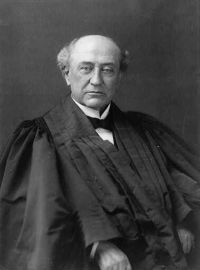
Portrait of David Josiah Brewer David Josiah Brewer Dunbar v. United States — Opinion of the Court

Whatever may be the rule in other cases, an admission by defendant that the writing which is offered is the message which he sent is sufficient to justify its introduction in evidence. An admission as to a writing is like an admission of any other fact; and when a competent witness testifies that certain writing, which he produces, was received by him, and that the defendant admitted that he sent it to him, he has laid the foundation for the introduction of the writing, and this though it be not in the handwriting of the defendant.
Source: Wikisource

Portrait of David Josiah Brewer David Josiah Brewer Dunbar v. United States — Opinion of the Court

So, when the charge is made that the defendant willfully, unlawfully, and knowingly, and with intent to defraud the revenues of the United States, smuggled and clandestinely introduced into the United States prepared opium, it carries with it a direct averment that he know that the duties were not fully paid, and that he was seeking to bring such goods into the United States without their just contribution to the revenues.
Source: Wikisource

Portrait of David Josiah Brewer David Josiah Brewer Dunbar v. United States — Opinion of the Court

So far as we can gather from what is before us, it would seem that the court made no mistake in pointing out certain items of testimony as corroboratory to that furnished by the accomplices. One purpose in these references, as stated in the charge, was to indicate to the jury that as to certain counts there could be no conviction, because as to them the testimony was only that of an accomplice, and uncorroborated. Of course, the defendant cannot complain of an instruction that no conviction can be had on any count supported by only the uncorroborated testimony of an accomplice.
Source: Wikisource

Get perspective with Kwize: daily news enlightened by great literature