Summary

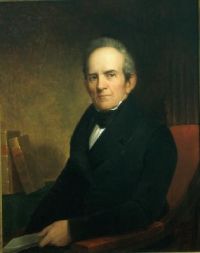
Portrait of Smith Thompson Smith Thompson United States v. Quincy — Opinion of the Court

Thus the part of a transaction becomes a crime in one citizen, while the whole of it is not a crime in another. The construction on the other side is, that the law meant to punish, not merely the consummation of the act, the fitting out and arming, but every step that is taken towards it; so that the fitting out, per se, becomes an offence, is a crime, without arming.
Source: Wikisource

Portrait of Smith Thompson Smith Thompson United States v. Quincy — Opinion of the Court

To attempt to do an act does not, either in law or in common parlance, imply a completion of the act, or any definite progress towards it. Any effort or endeavour to effect it will satisfy the terms of the law.
This varied phraseology in the law, was probably employed with a view to embrace all persons of every description who might be engaged, directly or indirectly, in preparing vessels with intent that they should be employed in committing hostilities against any powers with whom the United States were at peace.
Source: Wikisource

Portrait of Smith Thompson Smith Thompson United States v. Quincy — Opinion of the Court

The statute is one of a peculiar character, growing out of peculiar circumstances, and directed to a peculiar object connected with our neutral rights, on the one hand, and some neutral obligations on the other, which distinguish it from the slave act, and the other acts of congress with which the argument for the United States has sought to confound it. It demands a construction of its own
Source: Wikisource

Get perspective with Kwize: daily news enlightened by great literature